
Your table. Two decks. Plenty to debate.
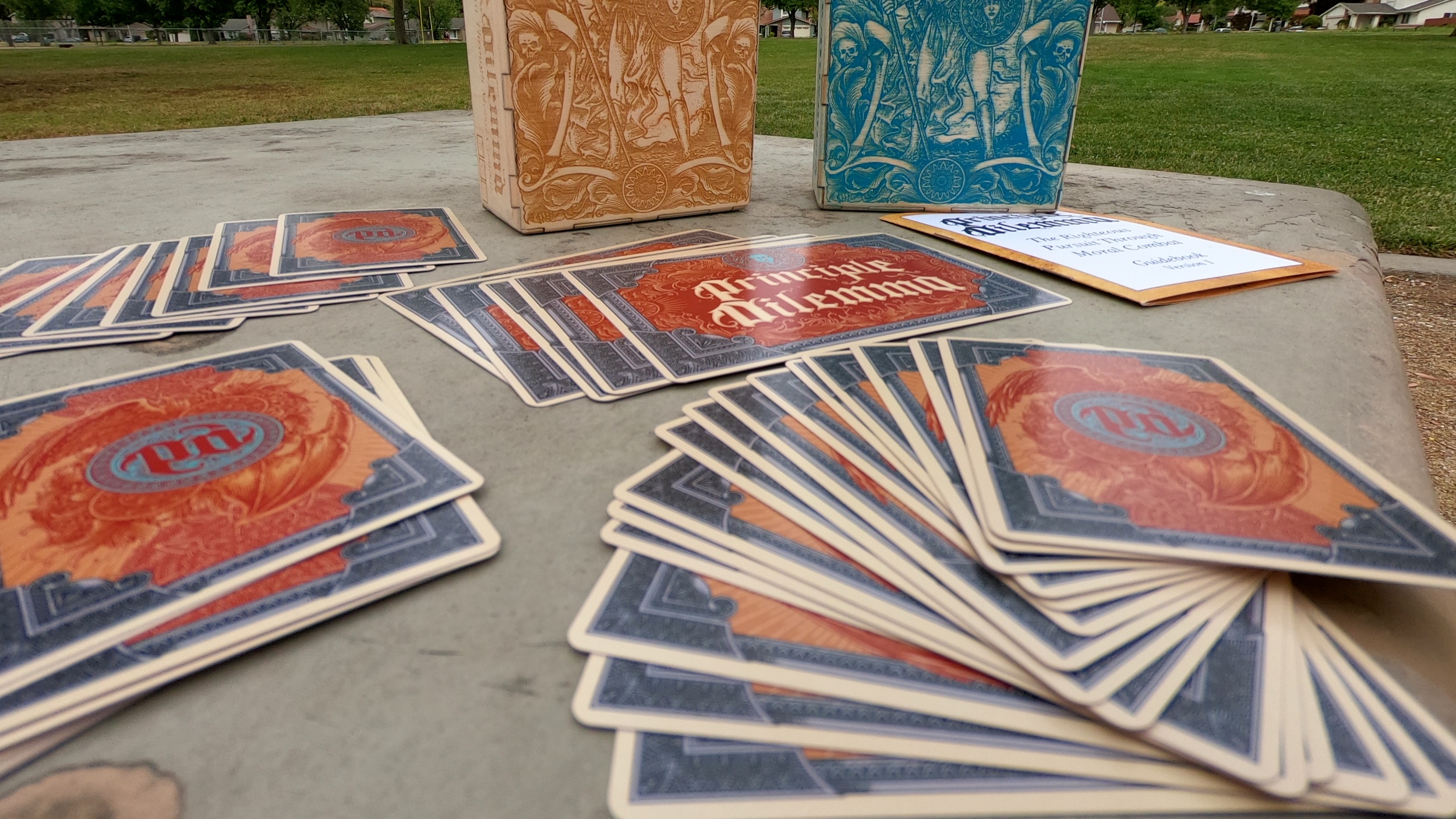
2–6+ players · Ages 16+ · 30–60 minutes
Bring friends, family, or people you’re just getting to know. You’ll take turns making tough choices and finding the twist that changes someone’s mind.
Get ready in four steps
Separate the decks. Shuffle the Dilemma cards and Deceit cards separately. Place both decks face down within reach.
Make room for discards. Keep a discard pile for each deck. The two halves of the box work well.
Deal five Deceit cards to each player. Keep your hand to yourself until it’s time to play a twist.
Choose the first Hero. The game’s owner goes first. If they aren’t playing, the person who opened the box starts. Everyone else is a Trickster.
Before you play, agree on a number of dilemmas or a target score.
The Hero · Make the choice
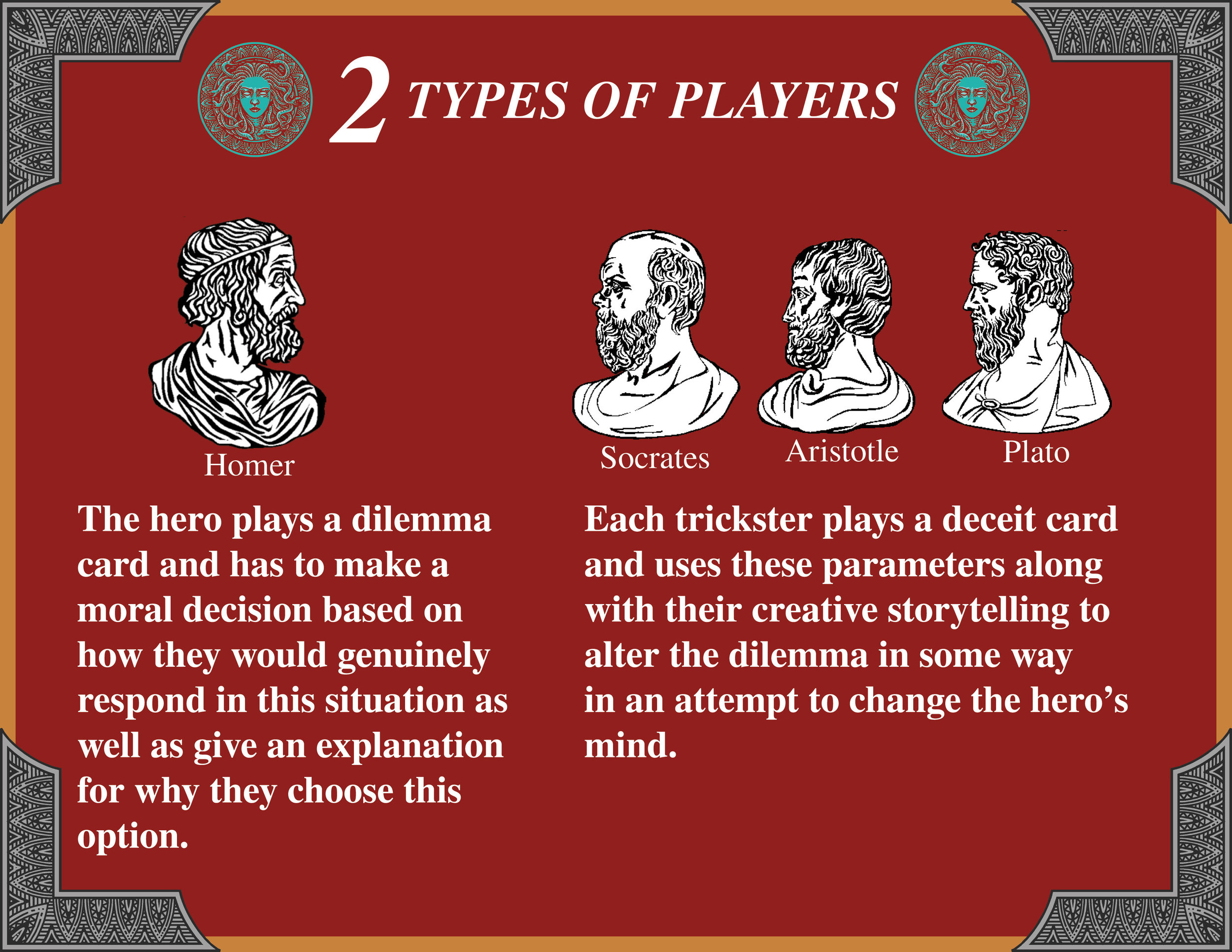
The role of the Hero is to make decisions based on their authentic thoughts and beliefs rather than what they think is the “right thing” to do. Although some details in the Dilemma may be ambiguous, it is the Hero’s duty to make their judgment call based on the information they have and to work within the parameters of the Dilemma card. When a quick decision needs to be made, a Hero must trust their instincts, choose wisely, and most importantly, give a clear description of why they made the choice they did.
The Trickster

The Trickster’s goal is to use a Deceit card from their hand to alter the Dilemma in such a way that causes the Hero to change their mind about the option they chose. The best Tricksters exercise their creativity by presenting their Deceit cards with persuasive implications. It is then the Hero’s job to draw their own conclusions from these implications. The Trickster may not change facts in the Dilemma beyond the parameters of the Deceit card.